

 Copy Reference
Recently, the Food and Agriculture Organization of the United Nations (FAO), in partnership with the International Fund for Agricultural Development (IFAD), the United Nations Children’s Fund (UNICEF), the World Food Programme (WFP) and the World Health Organization (WHO), issued The State of Food Security and Nutrition in the World 2020, which noted that “the COVID-19 pandemic is obscuring economic prospects in ways no one could have anticipated, and the situation may only get worse if we do not act urgently and take unprecedented action.” Preliminary assessment shows that the COVID-19 pandemic may add an additional 83 to 132 million people to the ranks of the undernourished in 2020 depending on future economic outcomes.
Food security is an important foundation of people’s livelihood and national security. Because of the impact of COVID-19, the international rice market is short of supply. Vietnam has exported more rice than Thailand in both volume and value. With limited supplies, the price of Vietnamese rice has risen to a nine-year record high. Since 2004, China’s grain production has achieved bumper harvests for 16 consecutive years. However, since the beginning of this year, the coronavirus outbreak has been compounded by natural disasters, while the rise of unilateralism and trade protectionism seriously interrupted the global supply chain and industrial chain, causing intensive concern from the general public on food security.
Do we have enough grain for food? China achieved bumper harvests of both summer and autumn grain this year. The Philippines is in the rice harvest season, while Thailand is actively promoting its rice exporting... All governments are keeping grain reserves and wielding social assistance policies for food distribution to provide for people’s livelihood. Solidifying the supply of food and major agricultural products to build a strong line of defense for food security and reinforce the nation’s rice bowl is an evergreen endeavor.
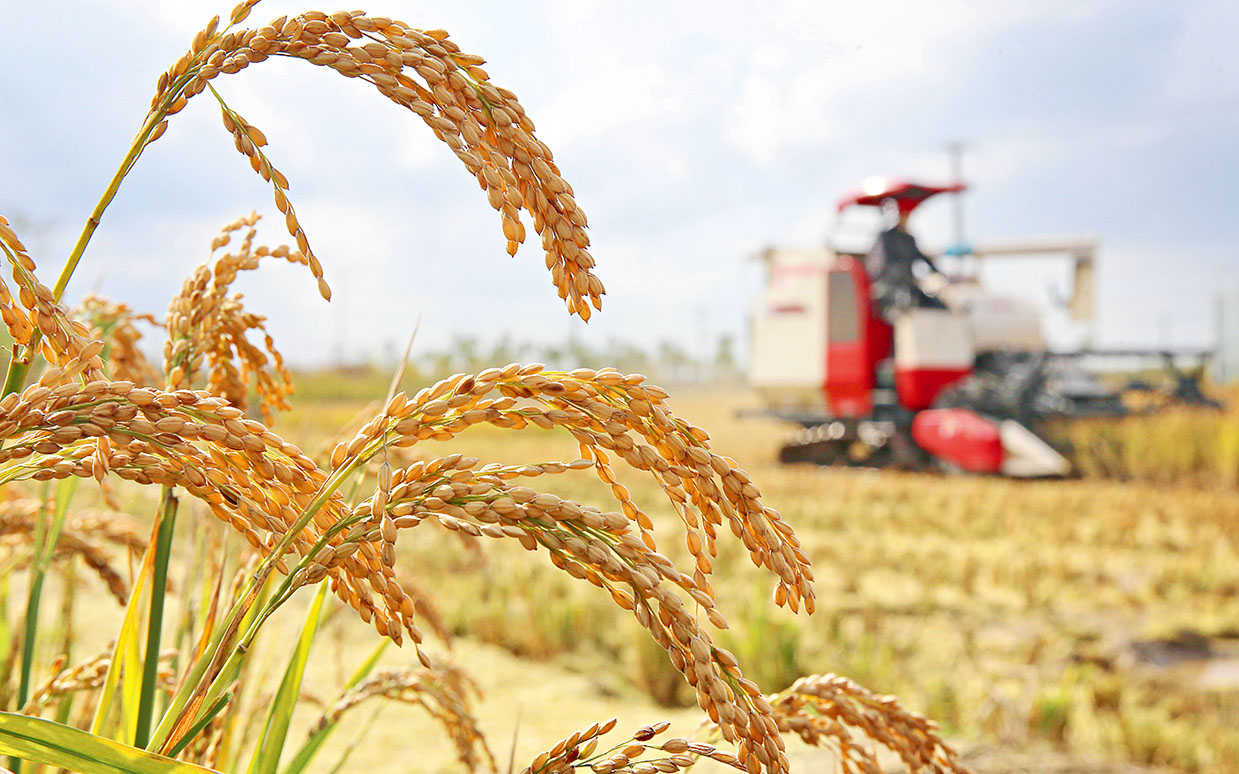
A harvester at work in a rice field in Nantong, east China’s Jiangsu Province, November 13, 2018. (XU CONGJUN)
ENSURING GLOBAL FOOD SUPPLY
The international grain market is expected to remain balanced despite COVID-19
By Zhong Liyan, Wang Zhe
The novel coronavirus disease (COVID-19) is making a massive impact around the world. Protectionist trade policies, transportation restrictions, and halted processing activities have profoundly disrupted the global food supply chain and resulted in food price volatility and potential threats to international food security.
The number of people facing acute food insecurity is expected to rise to 265 million in 2020 according to the annual Global Report on Food Crises released this April by the United Nations World Food Programme and its partners. To ensure domestic supply, several nations including Russia, Vietnam, Egypt, and India have reduced or even stopped food exports since the outbreak of COVID-19, which has in turn strained countries heavily dependent on imports. With some countries warning of state grain reserves for only three months, many have started sounding alarms about an impending food shortage.
Looming Crisis
“Disruptions to global agricultural supply chains are most likely to occur in April and May,” said a report from the Food and Agriculture Organization (FAO) of the United Nations. “Having a lot of food doesn’t mean you’re safe from a food crisis, as we’re now demonstrating,” remarked Abdolreza Abbassian, a senior economist at the FAO.
Phung Duc Tung, director of Hanoi-based Mekong Development Research Institute, expressed concern on April 1 that the subsequent months would bring risk of famine because governments were focusing on combating the pandemic and food security would no longer be a primary focus.
Due to COVID-19, many countries took measures to limit food exports. Vietnam announced a temporary ban on new rice export agreements, Cambodia limited rice exports to aromatic varieties, and Kazakhstan imposed a quota for wheat and flour exports. Disrupted economic activities and lockdown measures have posed greater challenges in transporting produce to markets, processing facilities and ports, leaving harvests rotting in the fields.
Statistics from the Thai Rice Exporters Association showed that 3.14 million tons of rice was exported from the country in the first half of 2020, a drop of 32 percent over the same period last year. Thailand is now the world’s third largest rice exporter after falling behind India and Vietnam. Some analysts attribute the decline in rice exports to reduced production due to severe drought last year coupled with weakened buying power amid the pandemic and rising prices due to appreciation of the Thai baht.
Vietnam has also benefited from misfortune of its rival. In May and June, 40 and 20 percent, respectively, of its exported rice was sold to the Philippines. Competitive pricing has been a significant factor driving the country’s success so far in 2020. In the first half of this year, the average price of Vietnam-produced rice with a crushing rate of 5 percent was US$65 per ton lower than that of Thailand’s rice of the same grade.
China and ASEAN member states are major grain producers and mostly developing countries. Food security is vitally important in the region, which is home to more than a quarter of the world’s population. During the Special ASEAN plus Three (APT) Summit on COVID-19 held in April, Chinese Premier Li Keqiang called for usage of the APT Emergency Rice Reserve and multilateral collaboration to ensure regional grain supply and market security to fend off a food crisis.
According to Li Xigui, a senior economist at the China National Grain and Oils Information Center, sufficient food stock makes a global food supply disruption seem unlikely. If the pandemic continues, however, risk of food insecurity around the globe will rise steeply, he warned.
Import Reliance
Despite consecutive bumper harvests, China has remained one of the world’s largest food importers. According to the National Bureau of Statistics of China, the country has imported over 100 million tons of food annually since 2015 and up to 80 percent of soybeans consumed in China are purchased from abroad.
With only 9 percent of the world’s arable land, China has succeeded in feeding a fifth of the world’s population and achieved self-sufficiency in production of rice, wheat, and corn. While a substantial proportion of its farmland is used to grow those three staple crops, soybeans, a principal source of edible oil, must be imported. Compared with home-grown crops, soybeans produced in countries like the United States have lower prices and higher oil output thanks to a high degree of mechanization and advanced techniques. Soybean meal, a by-product of oil extraction, provides a major source for farm feed.
A changing dietary landscape is another factor behind China’s reliance on imported agricultural products. In accordance with Engel’s law, as income rises, proportion of income spent on food falls. In a country struggling to feed its people, the average percentage of income spent on food can rise to as much as 80 percent. In China, the ratio has dropped to 30 percent alongside economic development. The Chinese people are now experiencing a shift from ensuring everyone is fed to healthier and more nutritious diets.
Due to lockdown measures to contain the COVID-19 pandemic, many Chinese people spent a lot of time at home and tried baking. Many were drawn to high-gluten wheat flour imported from abroad because most domestic flour products have a lower gluten content. “In response to the growing demand for high-quality food ingredients, we have developed more refined flour products,” announced Wei Yanhong, purchasing manager of Jinshahe Group, a leading flour miller in China. While procuring farmland for wheat with a high gluten content, the company also provides high-quality wheat imported from Kazakhstan through the Alashankou Integrated Free Trade Zone in Xinjiang. Thanks to many hours of sunshine, wheat from Kazakhstan makes smooth and chewy noodles.
With pleasant fragrance and taste, aromatic rice from Southeast Asian countries like Thailand and Myanmar has become increasingly popular in China.
China’s rice imports in 2019 reached 2.546 million tons, and Thailand was the largest rice trader with export value of US$350 million. Thailand’s main exports to China are jasmine rice, white rice, and 5-percent broken rice.
Sufficient Supply
In an April report on world food situation, the FAO stated that despite the uncertainty caused by the rapid spread of COVID-19, global grain markets are expected to remain well balanced. The report also estimated near-record wheat production in 2020.
According to Thailand’s Royal Irrigation Department, the country’s rice production will reach 24 million tons during the 2020-2021 season thanks to abundant rainfall this year. With about 10 million tons expected be consumed in its domestic market, the remainder will be exported mainly to China and African countries. “Thailand is unlikely to limit rice exports to China,” remarked Vivat Veskaisri, an honorary advisor to the Thai Rice Exporters Association. “Rice trade will remain a commercial activity that is immune to political factors, even if the pandemic persists.”
Russian Prime Minister Mikhail Mishustin said that with a food self-sufficiency rate up to 155 percent, his country has great potential to export grain. China Oil and Foodstuffs Corporation, the largest agricultural products supplier in the country, has expanded purchases of Russia-produced grain with massive orders for corn and soybeans in the first half of this year.
“Worst case scenario would be a temporarily degraded food consumption situation, but long-term living standards are not going to drop because of this,” opined Hu Bingchuan, a research fellow at the Rural Development Institute under Chinese Academy of Social Sciences. He sees no real problems in global food supply and demand and predicts a stable overall situation with both major grain exporters, including the United States, Canada, Russia, and the European Union, and large importing countries like China, Japan, and South Korea.
“China now has sufficient grain stock, and imported farm products are primarily for alleviating a structural supply shortage,” said Li Jun, a professor at the College of Economics and Management, China Agricultural University. He said that due to insufficient arable land and a huge population to support, China needs to improve its food supply through imports to ensure overall food security.
Import-reliant, less developed countries, where people are already suffering from war, climate shock, and economic instability, deserve more attention. The pandemic will exacerbate these challenges and is likely to expand the food-insecure population.
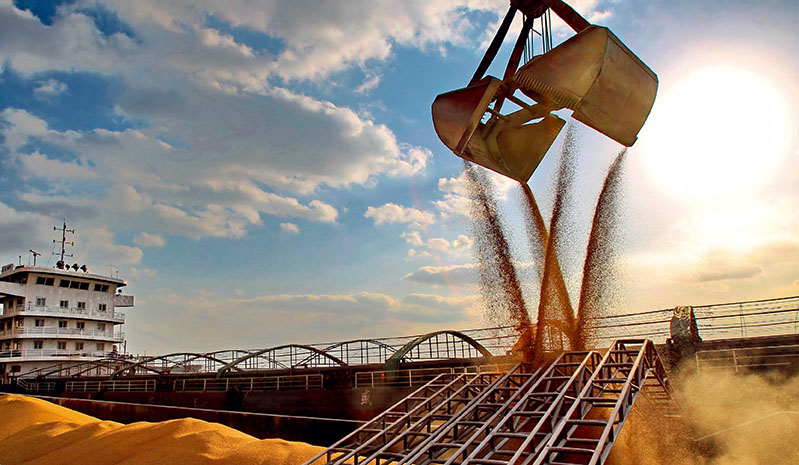
Imported soybeans are unloaded at Nantong Port in east China’s Jiangsu Province, on February 2, 2012. (XINHUA)
On July 30, 2016, inspection officers check and take samples of soybeans imported from Brazil on a cargo ship berthed at Yantai Port in east China’s Shandong Province. (XINHUA)

Russian exhibitors display their native delicacies during the 2017 China Yiwu Imported Commodities Fair. (LV BIN)
L0036.T003.JPG
Statistics from the Thai Rice Exporters Association showed that 3.14 million tons of rice was exported from the country in the first half of 2020, a drop of 32 percent over the same period last year.
L0036.T004.JPG
Vietnam has also benefited from misfortune of its rival. In May and June, 40 and 20 percent, respectively, of its exported rice was sold to the Philippines.
100 million tons
L0036.T005.JPG
According to the National Bureau of Statistics of China, the country has imported over 100 million tons of food annually since 2015 and up to 80 percent of soybeans consumed in China are purchased from abroad.
L0036.T006.JPG
With only 9 percent of the world’s arable land, China has succeeded in feeding a fifth of the world’s population and achieved self-sufficiency in production of rice, wheat, and corn.
NEGOTIATIONS WITH NATURE
Increasingly frequent natural disasters make grain acreage an even more crucial figure
By Chen Ke
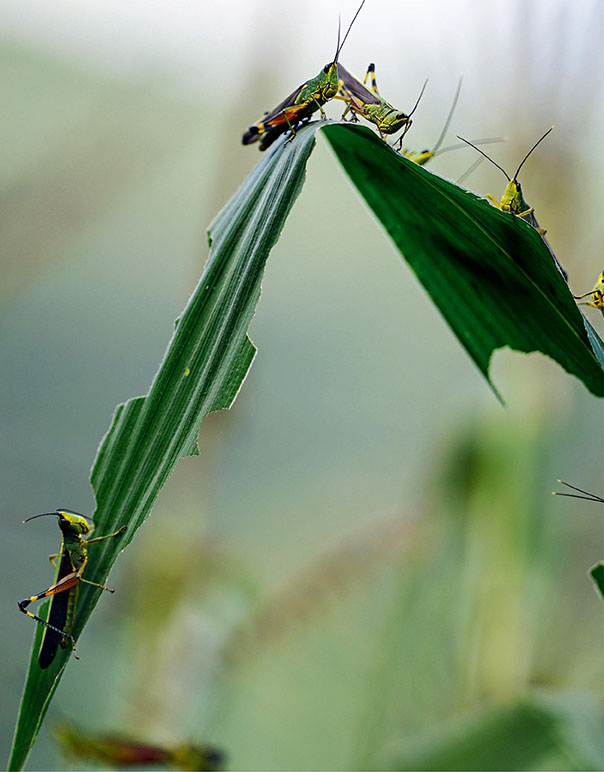
Locusts devour corn leaves in Pu’er, Yunnan, on July 14, 2020. (KANG PING)
The sudden outbreak of the COVID-19 pandemic during the spring-sowing season at the beginning of this year caused an asterisk for China’s grain production compared to previous years.
Since the beginning of the flood season (April-September in general), some areas in the middle and lower reaches of the Yangtze River were hit by severe rainstorms and floods. The long duration, wide distribution and large amount of rainfall resulted in big disasters at a critical period for grain filling of early-season rice, field management of middle-season rice, and transplanting of late-season rice. The reduction in rice output in affected areas was inevitable.
Grain production has always been “at the mercy of heaven.” Such is still the case in China. Natural conditions make China one of the most severely affected countries by natural disasters in the world. Over a history of thousands of years of farming, almost every type of natural disaster including drought, flood, crop freezing, plant disease, and insect pests have plagued China’s agricultural production to varying degrees.
Preventing natural disasters and minimizing their impact on grain production is an important step to ensuring food security.
Preventing Disaster Risk
“Among the many disasters that can hurt China’s grain production, flood and drought have been at the forefront recently,” noted Li Guoxiang, a researcher at the Rural Development Institute under the Chinese Academy of Social Sciences. He opines that food security has once again become a public concern not only because of the coronavirus outbreak at the beginning of the year, but also the uncertainty of the grain harvest brought by floods in the Yangtze River Basin at the beginning of the flood season.
“Grain output will inevitably decrease in Jiangxi, Hunan and other severely affected provinces,” said Li. “But it will not have a major impact on the country’s overall food security situation.” The favorable situation in Heilongjiang, Jilin, Henan, and other major grain producing provinces in northern China caused Li to still deliver a positive forecast on grain production this year. He is more concerned that corn, one of the three major crops, was also hurt by recent flooding in some areas.
“The key growing season for corn is September,” Li explained. “The key task for this year’s autumn grain harvest is overcoming the negative impact of the floods and recovering in time.” The autumn grain output accounts for three quarters of the annual grain output. Li believes that a good autumn harvest is very likely because planting acreage this year is slightly greater than in previous years, and the crops in the areas unaffected by the floods remain in good shape.
Before the floods, food security concerns were also raised because of fluctuations in the global grain market and an unprecedented outbreak of 400 billion desert locusts from Eastern Africa on the border of India and Pakistan.
Shi Wangpeng, professor at the Institute of Plant Protection and director of the Department of Entomology at China Agriculture University, considers the locust threat real. “Locusts like to eat almost any green crops, especially the main plants of wheat, rice and corn,” said Shi. “Wherever the locust swarms go, the grain crops will be gone.”
Shi ranks desert locusts among the most destructive species. With the Arabian Peninsula as their “base camp,” they can survive dry weather conditions more easily than other pests. China battled locusts for generations with methods such as reclaiming lands from lakes to reduce locust breeding ground and killing them with eco-friendly means such as insects and birds and more recently began deploying other lethal measures such as organophosphorus pesticides.
Earlier this year, swarms of yellow-spined bamboo locusts migrated from Laos to Pu’er, southwest China’s Yunnan Province, which resulted in a disaster of 160,000 mu (10,667 hectares) of bamboo forest lost or damaged. Shi stressed that although that species prefers bamboo, the swarms, if unchecked, can turn to grain crops for food.
On June 8, the General Office of the State Council released a circular on the first national comprehensive natural disaster risk survey, which will be conducted from 2020 to 2022. Some provinces have already responded with action. Experts believe the survey will comprehensively improve awareness about natural disasters and provide guidance for more profitable agricultural production.
Stable Acreage
The indirect effects of natural disasters on grain production demand more thought.
The most frequent natural disasters, meteorological disasters such as drought and flood, hurt the quality of arable land. After natural disasters such as drought, flood and extremely low temperatures, the PH value of the soil in arable land will change. After a series of natural disasters, the soil will not be fertile any longer. Without artificial fertilization, it is likely to become deserted wasteland.
Declining quality of arable land and more frequent cycles of natural disasters exert a negative impact on farmers’ enthusiasm for grain production. “It’s just luck,” said a wheat farmer from Xiping County, Henan Province in central China. “Good luck brings good weather for a good harvest. A poor harvest doesn’t earn enough to cover the cost of chemical fertilizers.” Many intermediate links serve the overall process of grain production. Natural disasters are a factor no one on the chain can do anything about. This unpredictability in grain production has motivated some of the young and middle-aged labor force in rural areas to abandon their native land.
Li Guoxiang cites several reasons for China’s decrease in grain acreage for three consecutive years. One is adjustment to the production mix of agricultural products, which has led to cultivation of more cash crops on arable land. Another reason is farmers’ declining enthusiasm for grain production, which is directly associated with frequent natural disasters.
The first step to food security is drawing red lines for grain acreage. “Without a guarantee of stable grain acreage, risks to food security are bound to rise,” said Li. “Especially in years with more severe natural disasters, grain acreage will be the basic foundation for stable grain output.”
High-Quality Farmland for High-Quality Grain
A year of natural disasters will be bad for grain output. However, other factors can motivate better harvests, such as development of high-standard farmland.
Li noted that since the founding of the People’s Republic in 1949, China has liberally leveraged its advantages in collective mobilization of farmers to participate in construction of water conservancy projects. “A number of key water conservancy projects have been constructed, and high-standard farmland developed, which have proved effective in resisting natural disasters,” said Li.
In 2011, development of high-standard farmland was included in the country’s top-level design. National Overall Plan for the Construction of High-standard Farmland (2010-2020) stated that the soil of the farmland should become richer in organic content and less contaminated. Farmland should be made highly productive to ensure stable yields, cultivated in an environmentally friendly manner, and ensured able to withstand floods and droughts. Farmland was designated to be used for agricultural production only and not for other purposes.
According to an expert in high-standard farmland construction, China has designated 1.8 billion mu (120 million hectares) of land as permanent basic farmland, including well-cultivated arable land, medium and low-yield land, and hillside land. Agricultural production capacity has been upgraded gradually through optimizing farming systems, improving crop varieties, and integrating pest management on vast and contiguous stretches of farmland, which has ensured supplies of main crops.
Thanks in large part to such strategies, China has achieved good harvests for 16 consecutive years.
Different regions have different natural conditions for agricultural production, and high-quality farmland has to be developed according to local conditions, said the expert. In northwestern China, for example, more shelter belts must be built to avert sandstorms and soil erosion. In southern China, the drainage capacity of farmland is a priority to defend against floods and salinization. In northern China, it is necessary to build more irrigation facilities to fend off drought.
In 2019, the General Office of the State Council released Opinions on Strengthening the Construction of High-standard Farmland to Enhance the National Food Security Capacity, which pointed out that a total of 800 million mu (53.4 million hectares) of high-standard farmland was to be available by 2020, with the goal for the year set at 80 million mu (5.34 million hectares). The latest data shows that more than half of the task for this year has been completed, with 43.38 million mu (2.89 million hectares) of such farmland already operating.
“Agricultural technology is not part of engineering,” added the expert. A nagging problem in high-standard farmland development is overemphasis on construction and neglect on follow-up management. Engineering gets too much attention while agricultural technology is overlooked. Factors constraining grain output such as the PH imbalance and the decline of fertility in arable land due to flood, drought and other natural disasters are problems that should be solved as part of future high-standard farmland development. Today, relevant Chinese government departments are revising their overall plan for the development of high-standard farmland, which is expected to improve the situation.
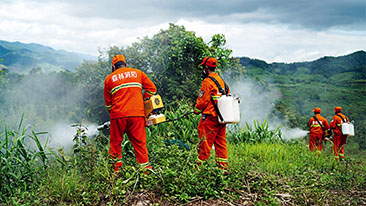
Locust-infested crops are sprayed with pesticides in Pu’er, Yunnan, on July 14, 2020. (KANG PING)
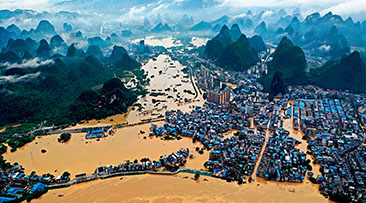
Aerial view of the Rongjiang River after heavy rain in Liuzhou, Guangxi, July 11, 2020. (HUANG XIAOABANG)
L0039.T001.JPG
A 2019 State Council document pointed out that a total of 800 million mu (53.4 million hectares) of high-standard farmland was to be available by 2020, with the goal for the year set at 80 million mu (5.34 million hectares). The latest data shows that more than half of the task for this year has been completed, with 43.38 million mu (2.89 million hectares) of such farmland already operating.
SEEDING SECURITY
Better seeds make food security more attainable
By Xu Hao, Pan Yingqiu
Seeds are at the heart of grain. “At critical moment, a small seed could trip up an entire nation,” said Yuan Longping, an academician with the Chinese Academy of Engineering and China’s “father of hybrid rice.” “The safety of the seed industry is about food security.”
After continuous improvement and breeding, seeds have become a resource bank of crop varieties and varieties with genetic potential. Improving crop yields by providing growers with several varieties of high-quality seeds and planting materials will help address the growing environmental challenges as well as poverty, according to the Food and Agriculture Organization of the United Nation (FAO). Food security relies on seed safety in agricultural communities.
Chinese Seeds
In August, a strain of “lazy man rice” growing in Shihuang town of Shengzhou, a county-level city in central Zhejiang Province, went viral on the internet. This rice can be harvested from crop to crop, and after the summer harvest, rice stubble would sprout again to be harvested in mid-October. Not only does it taste and smell good, but the rice also produces as much yield as double cropping rice. It is called “Hanyou 73” early-maturing ratooning hybrid rice. Ratooning rice is a mode of rice cultivation with a long history in China. Grain varieties such as hybrid rice, ratooning rice, super rice, and sea rice have been gradually improved and continue creating more possibilities for the development of agricultural technology.
According to estimates, the contribution rate of improved seeds to the increase in yield is more than 40 percent. Effectively guaranteeing food security depends on the mastery of seed breeding, production, and processing technology, as well as whether high-quality varieties can be popularized. Over the years, breeders have established efficient breeding technology systems such as super rice, dwarf male sterile wheat, and hybrid corn.
In May 2018, Yu Xinrong, then deputy minister of Agriculture and Rural Affairs, announced at a press conference that China has realized independent breeding of all varieties of seeds of staple crops such as rice, wheat, and soy, and that the acreage of corn varieties cultivated in China had recovered from 85 percent to more than 90 percent. He stressed that “Chinese grain” mainly uses “Chinese seeds.”
China is a major grain producer and seed consumer. However, the overall competitiveness of China’s seed industry is not great, and its seed industry started relatively late. Not until the late 1990s did China’s seed industry undergo substantial commercialization and marketization reforms.
“Chinese seeds” have long been a topic of concern. The research team at the Center for Forecasting Science under the Chinese Academy of Sciences has deemed it necessary to ensure a high degree of self-sufficiency in major grain varieties, regulate and keep grain prices under control, improve the existing regulatory system, strengthen the monitoring of foreign investment in the agricultural sector, and guard against risk of the seed market, especially the staple food seed market, becoming controlled by foreign capital.
In recent years, China has introduced a slew of measures to ensure the safety of the national seed industry. “Chinese seed scientists seek to make the Chinese seed industry invincible to fierce competition,” said Yuan Longping. “They are looking for ways to enhance the sense of urgency, improve the technological value of seed varieties and breeding techniques, continue to develop and strengthen the national seed industry, and cultivate more high-yield, high-quality, and high-stability varieties for farmers to choose.”
In April 2018, Chinese President Xi Jinping inspected the Nanfan Scientific and Research Breeding Base in Sanya, Hainan Province. He stressed that more than 1 billion people need to eat, which is the most central national condition. Improved seeds play a crucial role in increasing grain production. He called for determination to develop China’s seed industry and increased efforts to cultivate excellent seed varieties with independent intellectual property rights to ensure national food security from the source.
In recent years, China has launched construction of national seed bases and established three national-level seed production bases in Hainan, Sichuan, and Gansu provinces. Across the country, 52 major hybrid corn and rice seed production counties were established alongside some 100 national and regional-level improved seeds breeding bases. From 2018 to 2020, the central budget allocated a total of 939 million yuan (US$137.8 million) to support capacity improvement in terms of crop germplasm resources protection, breeding innovation, testing and evaluation, and breeding of improved seeds.
Hybrid Rice
Yuan Longping experienced famine years first-hand. He has seen people destitute, lying on the side of the road or under a bridge without a scrap of food and even starving to death.
“I have two dreams,” he said. “One is to breed rice that grows taller than people so we can enjoy its shade. The other is the widespread of hybrid rice around the world. It has been my lifelong mission to develop hybrid rice to benefit everyone in the world.”
With an aim to leverage science for the benefit of all mankind, Yuan has worked for years on hybrid rice seed production and teaching cultivation techniques. In 1979 at a scientific research conference held in the Philippines by the International Rice Research Institute, Yuan read his thesis Chinese Hybrid Rice Breeding in English. Since 1980, Yuan has been invited to the Philippines, the United States, Japan, France, the United Kingdom, Germany, Egypt, Australia, and other countries to give lectures and share experiences.
In the early 1990s, the FAO listed promotion of hybrid rice as the top strategy to solve food shortages in developing countries. Many Southeast Asian countries have begun to promote hybrid rice. Vietnam has experimented with planting Chinese hybrid rice in its northern region. The excellent quality, high-yield crop with strong disease resistance gave local growers a substantive bumper harvest.
Yuan and his team have developed different varieties of hybrid rice suitable for planting in Southeast Asian countries according to their soil and climate conditions. Chinese hybrid rice experts have repeatedly visited the Mekong Delta region, the granary of southern Vietnam, and Laguna, south of Manila, in the Philippines to inspect the rice planting environment and suggest countermeasures and plans to avert natural disasters such as droughts and seawater intrusion. Some salt-tolerant rice varieties developed by Chinese experts have been successfully planted experimentally in Kien Giang and Can Tho in the Mekong Delta of Vietnam. Using Chinese hybrid rice technology, “Xiling No.8” and other rice varieties suitable for growth in the Philippines were developed, and the people in Indonesia started calling Chinese hybrid rice “super rice.”
Hybrid rice varieties have improved quality and boosted yields, enabling growers to harvest high-quality rice even in difficult planting environments. Today, large-scale cultivation of Chinese hybrid rice is common in Southeast Asian countries including the Philippines, Indonesia, and Vietnam.
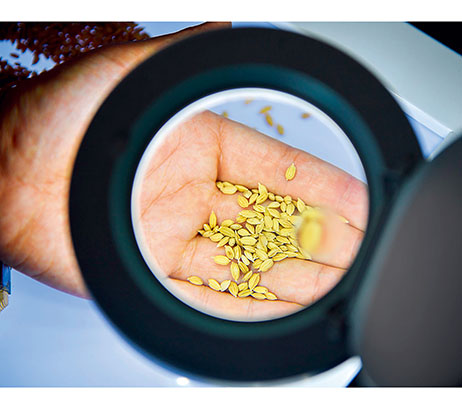
Staff checking a batch of experimental rice in a laboratory at a farm in Yongji County, Jilin Province, on August 12, 2020. (XU CHANG)
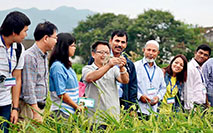
Xu Weichang (fourth left), a major hybrid rice seed producer in Yihuang County, Jiangxi Province, exchanges views with hybrid rice experts from India, the Philippines, Myanmar, Thailand, Indonesia, and Bangladesh at a hybrid rice seed production base on July 6, 2015. (CHEN ZIXIA)