

 Copy Reference
This year marks the 70th anniversary of the establishment of China-Indonesia diplomatic ties. China Report ASEAN conducted an exclusive interview with Djauhari Oratmangun, Indonesian Ambassador to China.
China Report ASEAN: What is your opinion on the development of bilateral relations over the past 70 years?
Djauhari Oratmangun: Relations between Indonesia and the People’s Republic of China (PRC) have been ongoing for centuries. After Indonesia’s independence in 1945 and acknowledgement of its sovereignty from the Dutch in 1949, Indonesia established political relations with the PRC in 1950. Indeed, it was the first country in Southeast Asia to establish official diplomatic relations with the PRC.
The Government of the Republic of Indonesia believes deeply and maintains strong faith in the spirit of cooperation and collaboration with China. Today, China-Indonesia relations can be characterized as “comprehensively friendly cooperation” in terms of economic partnership as well as cultural, scientific, and technological exchanges.
Chinese companies like Tencent and Alibaba hold major stakes in Gojek and Tokopedia, the two largest Indonesian unicorns. And that is just the tip of the iceberg—we see the scope of innovation in this sector continuing to attract Chinese investment and technologies.
We view our relations with China as successful in terms of politic, economic, and socio-cultural affairs despite hurdles we have faced. Indonesia strongly supports the one-China policy and the principle of non-interference as China continues striving to guarantee the safety and livelihood of Indonesian citizens living, studying, and working in China. In the spirit of the 70th anniversary, collaboration through cooperation remains a common goal that will open new opportunities despite any challenges ahead.
China Report ASEAN: President Xi Jinping and President Joko Widodo have reached consensus on synergy between the Belt and Road Initiative (BRI) and Indonesia’s Global Maritime Fulcrum (GMF) vision. What have the two countries achieved under this framework?
Oratmangun: Back in 2013, the 21st Century Maritime Silk Road Initiative was first proposed by President Xi Jinping during a state visit to Indonesia. In 2014, President Joko Widodo introduced the GMF vision, which shares profound similarities in concept, goals, and sectors with the BRI. Eventually, President Xi and President Jokowi reached important consensus on promoting synergy between BRI and GMF to benefit the peoples of both countries, and in 2018 the two governments signed a Memorandum of Understanding on jointly promoting cooperation within the framework of GMF-BRI.
Furthermore, during the Second Belt and Road Forum for International Cooperation in 2019, Indonesia and China signed 23 cooperation agreements under the framework of GMF-BRI to develop Indonesia’s four economic corridors. Areas of cooperation include development of a technological park, an industrial park, a waste treatment project, a power plant, e-commerce, transportation, ports, a special economic zone, 5G, sister-ports, and the fishery industry. At present, the two sides are exploring cooperation on industrialization, which could become a new highlight of the synergy in development strategies between the two countries.
The Chinese side supports building the Maritime Highway as proposed by President Jokowi and has participated in strategic and major infrastructure projects in Indonesia to build roads, rails, and ports. The Jakarta-Bandung High-Speed Railway is a flagship project of the Comprehensive Strategic Partnership between Indonesia and China. Its construction has now entered a new phase.
China Report ASEAN: Bilateral trade between China and Indonesia has maintained rapid growth. China has been the largest trading partner of Indonesia for eight consecutive years. What is driving this strong growth?
Oratmangun: Since 2013 when Indonesia and China elevated their relationship to a Comprehensive Strategic Partnership, bilateral relations between the two countries have merged into the fast lane of growth in many areas of cooperation, particularly in trade, tourism, and investment.
China has been Indonesia’s largest trading partner for many years, and Indonesia remains one of China’s largest trading partners in ASEAN. In 2019, total trade volume between Indonesia and China reached US$79.68 billion, up 2.9 percent compared to 2018. During this period, China became the main export destination for Indonesia.
Factors driving the increase in trade volume between the two countries include China’s high demand for coal to meet its energy needs and fuel its power plants, for starters. The second driver has been the growth of Indonesian businesses using ASEAN–China Free Trade Area (ACFTA) to trade with China. Third is China’s opening of its import policy through organizing the China International Import Expo (CIIE) among other measures. Fourth, development of e-commerce and online shopping is boosting domestic consumption of import products which leads to the fifth reason: improvements in Indonesian businesses’ market strategies when using Chinese e-commerce platforms.
On investment, in 2019 China’s mainland became the second largest investor in Indonesia with realized investment reaching US$4.7 billion, a jump of 95 percent compared to US$2.4 billion in 2018.
In term of tourism, Indonesia has become the fourth largest tourist destination for Chinese tourists among ASEAN countries. China is the second largest source of overseas tourists in Indonesia with 2.1 million visits in 2019.
In term of trade cooperation, Indonesia has potential products to explore with China such as fresh fruit, palm oil, machinery and electronic parts, wood products, and many more. In term of investment, Indonesia and China have four main cooperation sectors to explore: the digital economy, electric vehicles, tourism, and human resource development.
China Report ASEAN: In the post COVID-19 era, how should the two countries strengthen cooperation in public health?
Oratmangun: As two of most populous countries in the world, Indonesia and China share a responsibility to protect the health of more than 1.65 billion people. Our cooperation can start with medicine and medical knowledge. We have already seen seminars and discussions among medical practitioners from Indonesia and China on best practices to fight COVID-19. We are also seeing early cooperation in COVID-19 vaccine development.
Indonesia and China can build a system of joint strategic stockpiles. Both countries can build it from the ASEAN-wide humanitarian and disaster relief network. By learning from initial stage of this pandemic, both countries can design better methods for rapid production of medical equipment and medicines should another pandemic strike.
China Report ASEAN: The epidemic has exerted a major impact on social life and economic activity, with telecommuting and the digital economy developing quickly. What new opportunities for bilateral cooperation do you see on the horizon?
Oratmangun: First is a shift towards healthier lifestyles. This provides new opportunities in the business sector for those willing to explore the notion of health in products and services.
Second, going online and virtual is the new way of interaction. Everybody will be looking through digital media, and it will be the main platform to market your businesses and therefore, it is another good sector for investment.
Third, COVID-19 has fostered greater empathy throughout society. In Indonesia, we have seen movements to share food among communities and donations to health and other social organizations as well as increased religious interest. This opens opportunities for sectors such as halal products and changes the way companies need to look at social responsibility.
Lastly, the pandemic also created a society leaning towards an environmentally friendly business model. This is an opportunity for businesses to gain public support by marketing themselves as sustainable.
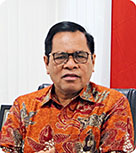
Indonesian Ambassador to China Djauhari Oratmangun.
L0043.T001.JPG
In 2019, total trade volume between Indonesia and China reached US$79.68 billion, up 2.9 percent compared to 2018.
L0043.T002.JPG
On investment, in 2019 China’s mainland became the second largest investor in Indonesia with realized investment reaching US$4.7 billion, a jump of 95 percent compared to US$2.4 billion in 2018.
L0043.T003.JPG
In term of tourism, Indonesia has become the fourth largest tourist destination for Chinese tourists among ASEAN countries. China is the second largest source of overseas tourists in Indonesia with 2.1 million visits in 2019.