

 Copy Reference
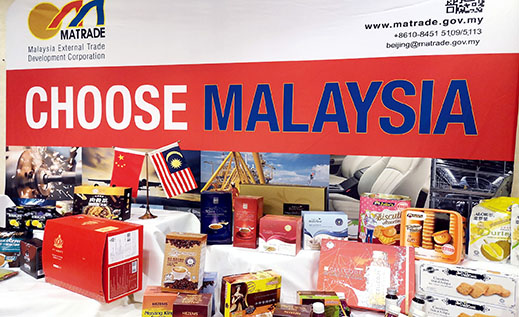
Malaysian products on display at the closing ceremony of 2020 Malaysia Week. (WANG FENGJUAN)
A loyal customer of PT Swift, a Malaysian producer of edible birds’ nests, An Qi’s morning routine includes freshly stewed birds’ nest. “I bought 14 bottles the moment I learned that Taobao [an online shopping app] was doing a promotion for edible Malaysian birds’ nests,” she reported. “The products are delivered weekly to ensure freshness and quality.”
The promotion of birds’ nests was part of Malaysia Week, an annual event co-organized by the Malaysian government and Chinese e-commerce giant Alibaba Group. The third Malaysia Week was launched online on September 9 and lasted 10 days. A variety of e-commerce platforms under Alibaba Group including Tmall, Kaola, Feizhu, Juhuasuan, and Taobao Live participated in the activity by promoting over 600 products from 200 brands. First launched in 2018, Malaysia Week is one project on which Alibaba Group is working in tandem with the Malaysian government under the eWTP (Electronic World Trade Platform) initiative.
Because this year is the China-ASEAN Year of Digital Economy Cooperation, companies are leveraging e-commerce platforms and the digital economy to explore new ways of development in the post-COVID era.
Bucking the Trend
Sales during Malaysia Week were impressive. Tan Chengzhe, chairman of PT SWIFT, revealed that his company’s sales during the promotion reached 10 million yuan, top among brands of edible birds’ nests sold on Alibaba platforms. During the second Malaysia Week last year, the company sold 80,000 bottles of instant birds’ nests in a livestream promotion. During a single livestream this year, PT SWIFT sold 5 million yuan of ready-for-stewing birds’ nests. In early 2020, the Malaysian bird nests company took its first step towards cross-border e-commerce by opening a PT SWIFT overseas shop on Tmall International, a popular online marketplace where many international brands sell their products to the Chinese consumers.
Malaysia Week also boosted many other Malaysian products such as coffee, dried durian snacks, beverages, mint candies, and slippers. Durian, a famous fruit in Southeast Asia, is quite popular in China. In a livestream promotion for Malaysia Week, two tons of Malaysian durians sold out quickly. The black thorn durian, famous for its flavor and rarity, was enthusiastically welcomed upon entry to the Chinese market. In a livestream selling to open Malaysia Week, 20 black thorn durians, priced at 588 yuan each, sold out in seconds. Alongside the tropical fruit, a total of 360,000 packs of Big Foot Himalaya Salt Mint Candy sold out in five minutes.
To support Malaysia Week, Alibaba invited a number of livestreamers including Viya, a top performer on Taobao Live, to recommend and sell Malaysian products. A couple of Malaysian livestreamers who had received Alibaba’s training on livestream selling participated in the promotion to show customers more about their country. Thanks to the work of Chinese and Malaysian livestreamers, edible birds’ nests and durians became hot commodities for Chinese consumers. Frazer&Neave (F&N), an established Malaysian food and beverage brand, sold out 3,000 cans of iced tea in minutes on its first attempt to sell products to Chinese consumers through Tmall International.
Many other Malaysian products such as clothing, cosmetics, skincare products and education commodities also benefited from Malaysian Week alongside food. For many, the promotion activity provided an ideal opportunity to launch an online store on Alibaba platforms. “I just opened a flagship store on Tmall International,” reported Ruby, head of Garden of EDEN Malaysia in China. “Online shops get our products and services to Chinese customers more quickly and conveniently than physical stores. I really hope Chinese people like them.”
The length of Malaysia Week this year was extended from seven to 10 days, and cumulative sales from the first six days eclipsed the total sales of last year’s Malaysia Week by 30 percent.
“Despite COVID-19, participation in this year’s Malaysia Week doubled and total sales were much higher than previous years,” said Jing Xiandong, board member of Alibaba Group and chairman of Ant Financial. “Close cooperation between Alibaba and the Malaysian government has helped this year’s Malaysia Week become a good example on leveraging the digital economy to help recover global trade. The digital platforms for global trade enable SMEs and young people to join in globalization. I believe that working together on technology sharing and opening-up will promote digital trade and help the global economy recover.”
“Malaysia Week is a prime example of win-win cooperation,” said Tan Chengzhe. “It brought real benefits to both sellers and customers. I am already thinking about 2021.”
Opportunities for E-commerce
In the first half of 2020, trade volume between China and ASEAN achieved year-on-year growth of 5.6 percent. Year-on-year growth of China’s imports from ASEAN was 5.1 percentage higher than that of Chinese exports to ASEAN.
China’s cross-border e-commerce development has been promising. The great challenges presented by the COVID-19 outbreak made this year the perfect time for ASEAN to enhance cooperation with China on e-commerce. ASEAN countries have great expectations to deepen such cooperation by tapping potential for digital trade, and they hope cross-border e-commerce will deliver more products from the region into the Chinese market.
Research has shown that in Malaysia, traditional forms of trade still dominate the retail industry. Physical marketplaces and stores do the most sales, followed by supermarkets and shopping malls. However, young people in ASEAN countries are open-minded about popular internet products. This is reflected not only in their interest in online buying and e-commerce platforms, but also in the market share of Chinese apps like Taobao, WeChat and TikTok in ASEAN, where they compete with Facebook, YouTube, Twitter, WhatsApp, Line, and Instagram.
This year marks the China-ASEAN Year of Digital Economic Cooperation, and Xu Ningning, executive president of the China-ASEAN Business Council, noted that in 2019, when both sides agreed to focus on cooperation in the digital economy the next year, no one suspected that a severe pandemic was waiting around the corner. Yet the outbreak has driven steep progress on digital cooperation, which has been crucial for countries to promote innovation-driven development strategies and seize opportunities emerging during a new scientific and technological revolution and industrial transformation. Against the backdrop of COVID-19, digital cooperation has played an even more significant role. Digital technologies and the digital economy have proved invaluable support for the fight against the pandemic, enabling resumption of production while safeguarding public health and safety. The world has witnessed the digital economy’s magic in terms of reviving the economy, spurring social development, creating jobs, and improving living standards.
ASEAN considers development of the digital economy extremely important, and has adopted the ASEAN Digital Integration Framework Action Plan (DIFAP) 2019-2025. The 26th ASEAN Economic Ministers Retreat included the digital economy as a priority for ASEAN cooperation in 2020. The ASEAN Leaders’ Vision Statement adopted at the 36th ASEAN Summit evidences ASEAN leaders’ consensus on enhancing “efforts to facilitate digital trade and digital connectivity, bridge the digital divide, build the ASEAN Smart Cities Network (ASCN), and strengthen high-quality human resource development in the digital age.”
While striving to control the pandemic, ASEAN countries have introduced a series of stimulus measures including those to help develop the digital economy and cross-border e-commerce to revive national economies. ASEAN launched the inaugural ASEAN Online Sales Day (AOSD) on ASEAN Day, August 8, 2020, the first time an online shopping event was conducted on a region-wide scale.
“China is showing the world the advantages of digitalization,” said Raja Dato Nushirwan Zhainal Abidin, Malaysian Ambassador to China. “And even more importantly, China is showing ASEAN how to roll out digital cooperation. As people become more comfortable with digital technologies, Chinese people and the Chinese government stand to benefit. The world will gain broader perspective through digital cooperation. Alongside the Chinese government, Chinese companies, including Alibaba Group, are also committed to this cause, which demonstrates China’s firm determination to enhance digital cooperation.
“SMEs constitute an important segment of Malaysia’s economy. The digital economy will create more opportunities for Malaysian SMEs.”
To enable more SMEs to benefit from China-ASEAN digital cooperation, Xu Ningning suggested that enterprises on both sides become more proactive and innovative in cross-border e-commerce cooperation. China and ASEAN are already working together to encourage SMEs to harness digital technologies and engage in digital trade, while business associations help companies find an expanded role in digital economics and cross-border e-commerce cooperation.
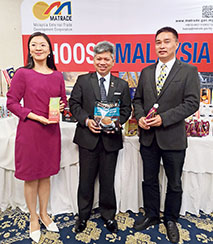
Raja Dato’ Nushirwan Zainal Abidin (center), Malaysian Ambassador to China, displays Malaysian products alongside managers of the Alibaba International Office. (WANG FENGJUAN)

During 2020 Malaysia Week, over 200 Malaysian sellers appeared live on Alibaba’s e-commerce platforms.
About eWTP:
The Electronic World Trade Platform, or eWTP, was proposed in 2016 by Jack Ma, former executive chairman of Alibaba Group. Through public-private cooperation, eWTP aims to incubate eTrade rules, build infrastructure for digital trade, and enable more SMEs and young people to take part in globalization. Today, the platform is heavily used in the Chinese cities of Hangzhou and Yiwu as well as in countries including Malaysia, Rwanda, Belgium, and Ethiopia.